A branch that becomes a streambank: the real work of live staking
A dormant willow branch can be more than a piece of brush. In the right wet soil, with the right species and site conditions, it may form roots and shoots and become part of a living bank. That is the.
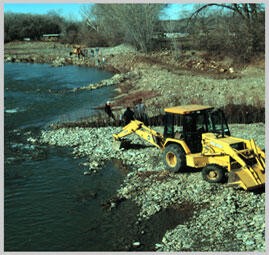
A dormant willow branch can be more than a piece of brush. In the right wet soil, with the right species and site conditions, it may form roots and shoots and become part of a living bank. That is the appealing simplicity of live staking. The less photogenic part is everything that must go right before the cutting survives.
Why a cutting can become infrastructure
Willows are among the woody plants capable of forming adventitious roots from stems. Streambank soil bioengineering uses that capacity to establish vegetation whose root systems can reinforce soil over time. USDA Natural Resources Conservation Service guidance includes live stakes, poles, fascines and other plant-based techniques. These are not interchangeable decorations: each addresses a different physical and ecological setting.
A streambank is moving material. Water scours its toe, saturated soil loses strength, and high flows can undercut an apparently healthy slope. A cutting that roots may help stabilize a suitable bank as it grows. But a living system is not a concrete retaining wall. The NRCS field guide emphasizes that plant-based streambank work can accept some natural movement after construction.
The four decisions that matter before planting
First comes site permission and stream classification. Waterways, wetlands and floodplains may be regulated, and restoration work can require design and permits. Never assume that a private property owner can alter a bank simply because the materials are plants.
Second comes species and source. Use locally appropriate native species suited to the actual flood and soil regime. The NRCS guide recommends willow or other stock with good adventitious-rooting capacity and emphasizes source material adapted to comparable climate and soil. A willow growing successfully beside one stream is not evidence that any willow will thrive on another.
Third comes timing and moisture. Dormant cuttings generally tolerate handling and establishment better than leafy stems that lose water rapidly. The guide describes soaking and installing live poles deeply enough to contact reliable moisture, with good soil-to-stem contact. Exact dimensions in a technical drawing are not a universal DIY specification.
Fourth comes what happens afterward. A planting needs a survival survey. The first spring flush of leaves is encouraging but not proof of lasting root establishment. Record drought, browse damage, burial, erosion and which species or positions persist through the next growing season.
A field record worth sharing
For a proposed small-scale trial on a permitted site, make a simple map and label each planting position. Record species, cutting source, date, diameter, length, insertion depth, soil moisture and shade. Photograph from fixed points at installation and again at defined intervals. Count living plants after the first summer, not just the first month. If a high-flow event removes a section, document that too.
A useful grower network could compare methods across similar sites without treating the strongest-looking photograph as a controlled experiment. One participant may have a wetter site, another heavier browse, and a third a different species. Those differences belong in the data.
The craft behind the apparent shortcut
The phrase 'stick it in the ground' hides nursery physiology, hydrology, design and stewardship. The result is more interesting than a quick trick: living materials can become part of productive ecological infrastructure, provided the project respects the river and its constraints.
Farm Guild Connect shares practical agriculture and land stewardship methods. This is an educational overview, not engineering advice or a claim that the Guild completed the pictured restoration.
Read the original sources
www.nrcs.usda.gov ↗www.nrcs.usda.gov ↗www.usgs.gov ↗Sources checked October 29, 2026. Time-sensitive details should be checked again before acting.
There is more to discover.
Explore more stories →